Thursday, November 29, 2007
Project Brief
This project is about the fact that people of upper-middle class tend to visit Armory Square and spend dollars upon dollars on dining and over-expensive boutiques when just outside of Armory Square lies many square feet of low-income housing. We would like to place a satirical sculpture (inspired by damali ayo’s work) in front of Starbucks in Armory Square that consists of a hodgepodge of money sculpted together to form the shape of a house. damali ayo’s work is related to our very own because she brings awareness to people by making or doing something controversial and satirical. On the sides of this sculpture there will be various holes where donations can be made. We would like to incorporate the sound of a donation bell also, whether the sculpture be constantly rotating and ringing or maybe it rings every time a donation is made. 100 percent of proceeds will go to a charity supporting these low-income areas. We will have to get some sort of permission to place our sculpture in this site. This piece won’t disrupt the surroundings, but it will definitely be noticeable to anyone nearby. Our goals for this project is to make people aware of their surroundings and start the beginning of a restoration of the low-income areas in Syracuse. We will measure our success by how much money is received and the reactions of people through interviews, the more positive feedback, the better. Our target audience is the upper-middle class that spend money in Armory Square. They most likely care about materialistic things if they are spending money in Armory Square, so I expect to receive reactions from both sides of the spectrum.

Sunday, November 4, 2007
Essay 3- damali ayo
As addressed in Kwon, “new genre public art- visual art that uses both traditional and nontraditional media to communicate and interact with a broad and diversified audience about issues directly relevant to their lives- is based on engagement” (105). Damali ayo’s work fits those exact guidelines. Her website‘s success, “rent-a- negro” is based on the participation of its audience. In damali ayo’s digital performance and dialogic art piece “rent-a-negro,” ayo assumes that every white person currently living in the United States is a racist and uses their ‘whiteness’ to his/her advantage. Her work directly implies that whether one has participated in her satirical rental of a Negro or simply just viewed the website, they have used black people. Ayo presents a lose/lose situation to her audience because while she succeeds in bringing about awareness and getting people to think, she herself appears as a racist, despite her claims otherwise.
The content of the piece involves the satirical portrayal of an actual website where one can “rent a negro.” At the top of the simply colored black, red, yellow, and blue page five links are titled, “Home, About, Pricing, FAQs, and Rent Now!” The “About” section gives real feedback from satisfied customers persuading the viewer and potential customer why renting a negro is a completely feasible action with comments such as “My friends still ask ‘how is that black friend of yours?’” The “About” section also gives some background history of the rentee (damali ayo) and her lifetime of experience addressing questions in white situations about her hair, culture, politics, and history. Pricing is detailed with specific prices for different events including: corporate/business rate: $350 per hour, personal/private/individual rate: $200 per hour, non-profit rate: $275 per hour, drop-in/appearances: $100 each, informational/high question volume: add $100 per hour, and emergencies/short notice (24 hour window): add $150 per hour. There are also additional services that cost extra such as: touch her hair: $25 each time, touch her skin: $35 each time, compare your skin tone to hers: $50, dance lessons for the rhythm-challenged: $250 per hour and many others. The FAQ section ensures the renter that the “rent a negro” process is a smooth and easy process that will remain confidential so that “no one knows you are renting.” Finally the rental form appears under the link “Rent Now!” complete with credit card icons, asking a range of information including one’s basic contact information, previous experience with black people, and reasons for choosing this service. Automatically under the question “Have you used black people before?” the yes bubble is filled in and same with the question “Did you pay or were your services rendered in kind (donated)?” These questions automatically assume that every white person has used a black person to their white advantage and to the fact that their ancestors may or may have not been involved in slavery.
Damali ayo makes herself out to be a racist because she does not accommodate the fact that being white does not automatically mean that one’s ancestors were slave owners. She also makes it impossible for her intended audience (white people) who are also participants in her project to (not appear) as the white privilege. The participants in this piece included not only anyone that followed through with the request by either filling out a rental form (white people) or submitting a resume to the website to be considered as a rental (black people), but people who simply out of curiosity viewed the website in it’s entirety. Catanese explains:
completing the rental form produces an implicit admission of possessing some degree of white privilege, whether or not one believes herself to have an embodied experience of this. Suddenly, the FAQ ‘How do I rent a Negro?’ becomes not a procedural but an ethical question that raises that stakes of the entire project demanding a very personal decision by each visitor (711).
Ayo not only intends people to think, but she demands it. She uses satire because “you want that humor but you want that sting. You want that ‘Oh, I feel sick to my stomach feeling,” ayo also recalls Jonathon Swift’s “A Modest Proposal” where Swift suggested in order to tackle poverty, why not eat the children? (Davila 2). Ayo succeeds in getting people to think because her audience’s reactions range from downright anger to confusion to even just playing along. She hopes, “it makes people take another look at the way they approach people” and says. “Many black people have come up to me and said it really sums up a lot of their experiences” (Robinson 2). Yes, damali ayo and others alike may have had similar experiences of white people touching their hair and asking about the care and maintenance, but this does not mean that every white person has taken part in the subjugation of black people. Ayo’s website automatically assumes this and excludes opposing opinions.
Damali ayo’s intentions are succeeded through people’s differing reactions to the website regarding either a relation to ayo’s experiences or anger in her audacity. In “A Day in the Life of: damali ayo” she explains how she “would often be the only person of color or one of few African-Americans at a party and strangers would make a point of asking her about her opinion about O.J. Simpson or news stories with racial overtones.” Does this particular scenario spell out racism? Damali ayo could have been the only black person at a social event because according to the 2000 Census only 12.3 percent of the U.S. population identified themselves as black or African American, explaining why there may be fewer black people at parties or social functions.
Ayo explains that she doesn’t intend to make fun of people as much as she wants to show “how absurd interracial interactions can be” (Davila 2). Although despite the fact that these interracial relations may be ridiculous, “a failure to recognize race is self-contradictory” as Neil Gotanda’s famous quote states. There are differences among races. Different hair, different heritage, different history, different opinions and so on. Interracial relations will continue to be illogical until there is an acceptance among both races that these differences will foster a curiosity. This idea retreats back to the fact that ayo’s intended audience is white people. She wants white people to accept the history of slavery and that it still exists today. She makes the entire idea of race a lose/lose situation for white people. Two options are given in reality, accept these differences among races, thus ultimately and naturally fostering curiosity or curious questions or fail to recognize the idea of race.
When all of the above are taken into consideration, it is implied that all white people are racists and that all white people use their ‘whiteness’ to their advantage. It is also implied that all white people are ancestors of those that owned slaves, when according to the U.S. census report for that last year before the Civil War, there were nearly 27 million whites in the country, eight million of them lived in the slaveholding states. The census also concluded that there were fewer than 385,000 individuals who owned slaves. This means that even if all slaveholders had been white, that would amount to only 1.4 percent of whites in the country or 4.8 percent of southern whites owning one or more slaves (Grooms). Additionally, she does not consider that there were also some black slave owners.
Finally, Kwon’s question on page 117 of One Place After Another: Site- Specific Art and Locational Identity of “What criteria of success and failure are posed now, especially to the artists, in this major reconfiguration of public art that moves aesthetic practice closer to social services?” directly relates to damali ayo’s work. She expects her art to not only create a reaction from her audience as all artists strive to do, but is striving to serve the public by forcing white people to admit up to their mistakes. More so, she is working to serve the black community by forcing white people to admit that they are responsible for slavery and ultimately the racial tensions that exist today.
Damali ayo’s main underlying intention is for white people to understand that racial tensions and “absurd” interracial relationships still exits today due to slavery. She wants understandings, apologies, maybe even reparations. This constant idea that the United States and white people have not taken responsibility for slavery is not true. In fact, numerous states have issued formal apologies including Virginia who in February marked the 400th anniversary of the founding of Jamestown and “expressed profound regret’ for the state's sanctioning of the institution of slavery” (Gershman 1). Since then, Maryland, North Carolina, and Alabama have also accepted blame for their contribution to slavery (Gershman 1).
Damali ayo may claim that she is not a racist, but her work “rent-a-negro” and the underlying intentions of her work show otherwise. Her rental form with her pre-conceived answers assumes that each and every white person has used black people to their advantage. She also deems every white person responsible for racial tensions due to slavery, forcing that the white community and the United States admit up to their mistakes, when in fact they already have. Damali ayo’s “rent-a-negro” portrayal of new genre public art brings hypocritical awareness to the community.
The content of the piece involves the satirical portrayal of an actual website where one can “rent a negro.” At the top of the simply colored black, red, yellow, and blue page five links are titled, “Home, About, Pricing, FAQs, and Rent Now!” The “About” section gives real feedback from satisfied customers persuading the viewer and potential customer why renting a negro is a completely feasible action with comments such as “My friends still ask ‘how is that black friend of yours?’” The “About” section also gives some background history of the rentee (damali ayo) and her lifetime of experience addressing questions in white situations about her hair, culture, politics, and history. Pricing is detailed with specific prices for different events including: corporate/business rate: $350 per hour, personal/private/individual rate: $200 per hour, non-profit rate: $275 per hour, drop-in/appearances: $100 each, informational/high question volume: add $100 per hour, and emergencies/short notice (24 hour window): add $150 per hour. There are also additional services that cost extra such as: touch her hair: $25 each time, touch her skin: $35 each time, compare your skin tone to hers: $50, dance lessons for the rhythm-challenged: $250 per hour and many others. The FAQ section ensures the renter that the “rent a negro” process is a smooth and easy process that will remain confidential so that “no one knows you are renting.” Finally the rental form appears under the link “Rent Now!” complete with credit card icons, asking a range of information including one’s basic contact information, previous experience with black people, and reasons for choosing this service. Automatically under the question “Have you used black people before?” the yes bubble is filled in and same with the question “Did you pay or were your services rendered in kind (donated)?” These questions automatically assume that every white person has used a black person to their white advantage and to the fact that their ancestors may or may have not been involved in slavery.
Damali ayo makes herself out to be a racist because she does not accommodate the fact that being white does not automatically mean that one’s ancestors were slave owners. She also makes it impossible for her intended audience (white people) who are also participants in her project to (not appear) as the white privilege. The participants in this piece included not only anyone that followed through with the request by either filling out a rental form (white people) or submitting a resume to the website to be considered as a rental (black people), but people who simply out of curiosity viewed the website in it’s entirety. Catanese explains:
completing the rental form produces an implicit admission of possessing some degree of white privilege, whether or not one believes herself to have an embodied experience of this. Suddenly, the FAQ ‘How do I rent a Negro?’ becomes not a procedural but an ethical question that raises that stakes of the entire project demanding a very personal decision by each visitor (711).
Ayo not only intends people to think, but she demands it. She uses satire because “you want that humor but you want that sting. You want that ‘Oh, I feel sick to my stomach feeling,” ayo also recalls Jonathon Swift’s “A Modest Proposal” where Swift suggested in order to tackle poverty, why not eat the children? (Davila 2). Ayo succeeds in getting people to think because her audience’s reactions range from downright anger to confusion to even just playing along. She hopes, “it makes people take another look at the way they approach people” and says. “Many black people have come up to me and said it really sums up a lot of their experiences” (Robinson 2). Yes, damali ayo and others alike may have had similar experiences of white people touching their hair and asking about the care and maintenance, but this does not mean that every white person has taken part in the subjugation of black people. Ayo’s website automatically assumes this and excludes opposing opinions.
Damali ayo’s intentions are succeeded through people’s differing reactions to the website regarding either a relation to ayo’s experiences or anger in her audacity. In “A Day in the Life of: damali ayo” she explains how she “would often be the only person of color or one of few African-Americans at a party and strangers would make a point of asking her about her opinion about O.J. Simpson or news stories with racial overtones.” Does this particular scenario spell out racism? Damali ayo could have been the only black person at a social event because according to the 2000 Census only 12.3 percent of the U.S. population identified themselves as black or African American, explaining why there may be fewer black people at parties or social functions.
Ayo explains that she doesn’t intend to make fun of people as much as she wants to show “how absurd interracial interactions can be” (Davila 2). Although despite the fact that these interracial relations may be ridiculous, “a failure to recognize race is self-contradictory” as Neil Gotanda’s famous quote states. There are differences among races. Different hair, different heritage, different history, different opinions and so on. Interracial relations will continue to be illogical until there is an acceptance among both races that these differences will foster a curiosity. This idea retreats back to the fact that ayo’s intended audience is white people. She wants white people to accept the history of slavery and that it still exists today. She makes the entire idea of race a lose/lose situation for white people. Two options are given in reality, accept these differences among races, thus ultimately and naturally fostering curiosity or curious questions or fail to recognize the idea of race.
When all of the above are taken into consideration, it is implied that all white people are racists and that all white people use their ‘whiteness’ to their advantage. It is also implied that all white people are ancestors of those that owned slaves, when according to the U.S. census report for that last year before the Civil War, there were nearly 27 million whites in the country, eight million of them lived in the slaveholding states. The census also concluded that there were fewer than 385,000 individuals who owned slaves. This means that even if all slaveholders had been white, that would amount to only 1.4 percent of whites in the country or 4.8 percent of southern whites owning one or more slaves (Grooms). Additionally, she does not consider that there were also some black slave owners.
Finally, Kwon’s question on page 117 of One Place After Another: Site- Specific Art and Locational Identity of “What criteria of success and failure are posed now, especially to the artists, in this major reconfiguration of public art that moves aesthetic practice closer to social services?” directly relates to damali ayo’s work. She expects her art to not only create a reaction from her audience as all artists strive to do, but is striving to serve the public by forcing white people to admit up to their mistakes. More so, she is working to serve the black community by forcing white people to admit that they are responsible for slavery and ultimately the racial tensions that exist today.
Damali ayo’s main underlying intention is for white people to understand that racial tensions and “absurd” interracial relationships still exits today due to slavery. She wants understandings, apologies, maybe even reparations. This constant idea that the United States and white people have not taken responsibility for slavery is not true. In fact, numerous states have issued formal apologies including Virginia who in February marked the 400th anniversary of the founding of Jamestown and “expressed profound regret’ for the state's sanctioning of the institution of slavery” (Gershman 1). Since then, Maryland, North Carolina, and Alabama have also accepted blame for their contribution to slavery (Gershman 1).
Damali ayo may claim that she is not a racist, but her work “rent-a-negro” and the underlying intentions of her work show otherwise. Her rental form with her pre-conceived answers assumes that each and every white person has used black people to their advantage. She also deems every white person responsible for racial tensions due to slavery, forcing that the white community and the United States admit up to their mistakes, when in fact they already have. Damali ayo’s “rent-a-negro” portrayal of new genre public art brings hypocritical awareness to the community.
Tuesday, October 30, 2007
Mary Jane Jacob lecture in relation to Kwon
Miwon Kwon explains in One Place After Another: Site Specific Art and Locational Identity that "new genre public artists seek to engage (nonart) issues in the hearts and minds of the 'average man on the street' or 'real people' outside the art world. Mary Jane Jacob explained this concept in great detail in her lecture. She explained that museums acted as the 'middle man' between the artists and their audience and by taking these public art projects out of museums, the art is brought back into common life. Museums are intended to attract the upper class, making it more difficult for the 'common man' to be affected by art. They are also very much like institutionalized gatekeepers, when in reality the artist should be the only gatekeeper to his/her art. Jacob explained that John Dewey said that "art can have a consequence, but we must allow it do that." In other words, all art is produced for a purpose and by putting these art pieces in museums, only certain people are affected by it. New genre public art brings art back to the people and makes these projects just as much about public as they are art.
Analysis Project Ideas
Topic: the candy bar "designed and produced in collaboration with members of a candy-making union, by Simon Grennan, Christopher Sperandio, and the Bakery, Confectionery and Tobacco Workers' International Union of American Local No. 552"
1. Do the in class readings have to be about the candy bar in specific or do they just have to address similar ideas that the candy bar project posesses?
2. What are you looking for specifically in the analysis?
Title: Bugs in the system {street art multiples}
Personal Author: Schwartzman, Allan
Journal Name: The Print Collector's Newsletter
Title: Forum: who should create public art
Personal Author: RAKONCAY, Arlene
Journal Name: American Artist
Title: Does the public want public sculpture?
Personal Author: HAWTHORNE, Don
Journal Name: Art News
Title: Private sector/public art {Washington, D.C; symposium}
Personal Author: Fleming, L.
Journal Name: Art News
1. Do the in class readings have to be about the candy bar in specific or do they just have to address similar ideas that the candy bar project posesses?
2. What are you looking for specifically in the analysis?
Title: Bugs in the system {street art multiples}
Personal Author: Schwartzman, Allan
Journal Name: The Print Collector's Newsletter
Title: Forum: who should create public art
Personal Author: RAKONCAY, Arlene
Journal Name: American Artist
Title: Does the public want public sculpture?
Personal Author: HAWTHORNE, Don
Journal Name: Art News
Title: Private sector/public art {Washington, D.C; symposium}
Personal Author: Fleming, L.
Journal Name: Art News
Sunday, October 21, 2007
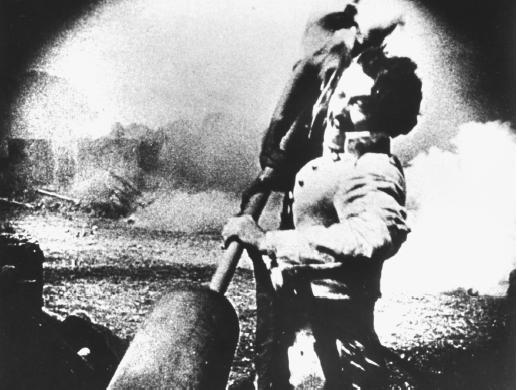
This is not a pipe either.
The author in "This is not a pipe either" presents the idea that documentaries are a "narrative guilding...the interpretation of the images must flow along a unilinear pathway, at such a speed that the viewer has no time for any reflection." This is a complete contrasting view of Sontag because Sontag talks about leaving the artwork open for interpretation. The article goes on to talk about how documentaries have a predetermined course and does not encourage free thought and ideas, similar to conservative politics. Helms' overall strategy was to "create the preconditions for the public to blindly follow into self-censorship, thereby agreeing to the homogenous order desired by the elite class.
http://www.filmreference.com/images/sjff_01_img0061.jpg
http://www.filmreference.com/images/sjff_01_img0061.jpg
Sunday, October 14, 2007
Environmental Justic in Onondaga County Revision
The Superfund Program is a superb example of a government program gone awry. The program's original intention to better the environment has now been replaced by the corrupt political, social, and monetary intentions of self-interested individuals. A Christian Science Monitor article, "Superfund Program: A Smaller Cleanup Rag" was released into the public on November 14, 2003. The article outlines the pros and cons of a federal cleanup program, known as Superfund. Superfund was put into effect in 1980 to enable the cleanup of hazardous wastes that filled our streams, lakes, and air, threatening not only the environment, but the health of many living near these toxic sites. Each year the government has given $1 billion to carry out necessary actions to cleanup each particular site, and the program has succeeded in cleaning up 866 sites thus far. Now Congress has failed to reinstate Superfund's budget since 1995 and they are ultimately bankrupt. So the problem prevails, who is going to pay for the remaining sites that still are a health threat?
There are two solutions, make the "polluter pay," or make the taxpayers foot the bill. The "polluter pay" principle usually involves the Environmental Protection Agency trying to "hunt down one or two deep-pocket corporations that can somehow be linked to the site and then hits them with the full cost of cleanup" (Knickerbocker 2). This principle results in many excess fees due to the need for a lawyer and private investigators, draining the Superfund's resources for unnecessary rationales. Forcing the taxpayers to pay is becoming by increasing numbers, the solution. In fact, Superfund has grown to become 58 percent of the taxpayers’ responsibility, up from 18 percent.
Superfund's dilemma has caused these waste sites to remain worthless areas of the community because urban developers are hesitant to purchase land in fear that they will remain responsible for the land's past history. In the end it is most likely that American taxpayers will remain responsible for the irresponsible actions of large corporations, a typicality of this country.
The four and a half mile long, one mile wide, Onondaga Lake was added to Superfund’s list of contaminated waste sites in 1994 due to the “2.65 million cubic yards of mercury-contaminated sediments at lake depths ranging up to 30 feet” (Urbina 1). Honeywell International was ordered to begin a seven year process beginning in 2005 of dredging to remove 165,000 pounds of mercury and other toxins that were dumped into the lake when Honeywell merged with Allied Chemical before it closed in 1988. Despite the fact that the lake measures over 2 million cubic yards, it is proposed that Honeywell only dredges a mere 508,000 cubic yards. The intention is to cap the remaining area of the lake with sand and gravel, which is a temporary, short-term solution (Urbina 1). Onondaga Lake is just one example of hundreds that Superfund attempts to fix in a quick, cheap, meager way.
The Superfund program has remained unfair, resulting in little success and popularity. During the first twelve years, 156 sites reached the construction complete phase compared with 541 sites from 1993 to 1999 (Daley and Layton 376). The dramatic difference in numbers sparks many questions, like why are some sites a higher priority? What causes some sites to be cleaned up faster and more efficiently compared to others? The answer lies in many aspects of financial, political, and social limitations.
The Policy Studies Journal has theorized three possible hypothesizes, all of which have been tested based on independent variables, including hazardous ranking score, estimated cost, number of responsible parties, population density, appearance of an active community group, home ownership, income, and region. The dependent variable is based on the time the particular site was listed on the National Priority List.
After many mathematical equations were applied to test results and the relationship between the independent variables and the dependent variables was determined, The Administrative Convenience/Transaction Costs Model proved itself in many ways. This “assumes that bureaucrats are self-interested individuals who seek to attain their goals rationally” (Daley and Layton 377). The results showed that the easier sites were taken care of before the worst, based on a hazardous ranking score ranging from 28.5 to 100, representing “the sites’ potential human and ecological health risk” (Daley and Layton 381). Bureaucrats pursue sites that are cheaper and more convenient to handle. When more parties are responsible and more community groups involved, the process is more difficult, and ultimately put on hold. Bureaucrats then move on to easier sites to make a faster dollar. This approach is completely contradictory to Superfund’s original purpose: to improve the quality of life for individuals living near a potentially dangerous toxic waste site that can hinder health problems, including birth defects, cancer, and changes in neuro-behavioral functions (Daley and Layton 375). As Daley and Layton explain, some could argue that this approach is efficient and strategic. Despite that some may believe this approach to be efficient, only 677 of 1,235 sites have reached the construction completion phase since the early 1990s (Daley and Layton 380), leaving the most problematic sites untouched.
Not only are the aforementioned financial and social variables unfair, it is also proven that there is much political pressure involved as well. The Policy Studies Journal states that, “Sites are systematically more likely to reach construction completion when an elected official from the site’s congressional district sits on a Superfund oversight committee.”
It is clear that Superfund is a program motivated and controlled by political, social, and monetary means. A program that is intended to help better the environment and improve peoples’ quality of life, ends up hurting the people even more because when Superfund reaches the end of their funds, the taxpayers will be using their own personal resources to correct the problem caused by someone else. Superfund is inefficient in all aspects, from debate over who foots the bill to what site will be tackled next. Then, when a site is finally considered, it is likely that an cheaper, impermanent solution is applied to correct the problem. Onondaga Lake is just one example of a hazardous site is still in the process of being remediated. The "limited cleanup approach" (Urbina 1) will cost a total $237 million compared with $2.33 billion for a complete remediation, involving "dredging and placing a permanent cap across the entire 2, 329 acres of the lake bottom" (Ubrina 2).
There are two solutions, make the "polluter pay," or make the taxpayers foot the bill. The "polluter pay" principle usually involves the Environmental Protection Agency trying to "hunt down one or two deep-pocket corporations that can somehow be linked to the site and then hits them with the full cost of cleanup" (Knickerbocker 2). This principle results in many excess fees due to the need for a lawyer and private investigators, draining the Superfund's resources for unnecessary rationales. Forcing the taxpayers to pay is becoming by increasing numbers, the solution. In fact, Superfund has grown to become 58 percent of the taxpayers’ responsibility, up from 18 percent.
Superfund's dilemma has caused these waste sites to remain worthless areas of the community because urban developers are hesitant to purchase land in fear that they will remain responsible for the land's past history. In the end it is most likely that American taxpayers will remain responsible for the irresponsible actions of large corporations, a typicality of this country.
The four and a half mile long, one mile wide, Onondaga Lake was added to Superfund’s list of contaminated waste sites in 1994 due to the “2.65 million cubic yards of mercury-contaminated sediments at lake depths ranging up to 30 feet” (Urbina 1). Honeywell International was ordered to begin a seven year process beginning in 2005 of dredging to remove 165,000 pounds of mercury and other toxins that were dumped into the lake when Honeywell merged with Allied Chemical before it closed in 1988. Despite the fact that the lake measures over 2 million cubic yards, it is proposed that Honeywell only dredges a mere 508,000 cubic yards. The intention is to cap the remaining area of the lake with sand and gravel, which is a temporary, short-term solution (Urbina 1). Onondaga Lake is just one example of hundreds that Superfund attempts to fix in a quick, cheap, meager way.
The Superfund program has remained unfair, resulting in little success and popularity. During the first twelve years, 156 sites reached the construction complete phase compared with 541 sites from 1993 to 1999 (Daley and Layton 376). The dramatic difference in numbers sparks many questions, like why are some sites a higher priority? What causes some sites to be cleaned up faster and more efficiently compared to others? The answer lies in many aspects of financial, political, and social limitations.
The Policy Studies Journal has theorized three possible hypothesizes, all of which have been tested based on independent variables, including hazardous ranking score, estimated cost, number of responsible parties, population density, appearance of an active community group, home ownership, income, and region. The dependent variable is based on the time the particular site was listed on the National Priority List.
After many mathematical equations were applied to test results and the relationship between the independent variables and the dependent variables was determined, The Administrative Convenience/Transaction Costs Model proved itself in many ways. This “assumes that bureaucrats are self-interested individuals who seek to attain their goals rationally” (Daley and Layton 377). The results showed that the easier sites were taken care of before the worst, based on a hazardous ranking score ranging from 28.5 to 100, representing “the sites’ potential human and ecological health risk” (Daley and Layton 381). Bureaucrats pursue sites that are cheaper and more convenient to handle. When more parties are responsible and more community groups involved, the process is more difficult, and ultimately put on hold. Bureaucrats then move on to easier sites to make a faster dollar. This approach is completely contradictory to Superfund’s original purpose: to improve the quality of life for individuals living near a potentially dangerous toxic waste site that can hinder health problems, including birth defects, cancer, and changes in neuro-behavioral functions (Daley and Layton 375). As Daley and Layton explain, some could argue that this approach is efficient and strategic. Despite that some may believe this approach to be efficient, only 677 of 1,235 sites have reached the construction completion phase since the early 1990s (Daley and Layton 380), leaving the most problematic sites untouched.
Not only are the aforementioned financial and social variables unfair, it is also proven that there is much political pressure involved as well. The Policy Studies Journal states that, “Sites are systematically more likely to reach construction completion when an elected official from the site’s congressional district sits on a Superfund oversight committee.”
It is clear that Superfund is a program motivated and controlled by political, social, and monetary means. A program that is intended to help better the environment and improve peoples’ quality of life, ends up hurting the people even more because when Superfund reaches the end of their funds, the taxpayers will be using their own personal resources to correct the problem caused by someone else. Superfund is inefficient in all aspects, from debate over who foots the bill to what site will be tackled next. Then, when a site is finally considered, it is likely that an cheaper, impermanent solution is applied to correct the problem. Onondaga Lake is just one example of a hazardous site is still in the process of being remediated. The "limited cleanup approach" (Urbina 1) will cost a total $237 million compared with $2.33 billion for a complete remediation, involving "dredging and placing a permanent cap across the entire 2, 329 acres of the lake bottom" (Ubrina 2).
Tuesday, October 9, 2007
Subscribe to:
Posts (Atom)